 Join us for the Graduate GIS Programs Information Session

What Are The Fundamentals of Cartography?
At its core, cartography is about the visual representation of a space or place. While this may seem like a simple concept at first glance, it can become infinitely complex when you consider the number of choices that have to be made when creating a map.

In addition, modern mapmakers have a greater variety and a much greater volume of data to leverage; because of this complexity, we wanted to look at the fundamentals of cartography and explore the key elements of mapping as well as the purpose and usage of different kinds of maps.
Related Content: Read more about our cartography and visualization course.
Request Brochure
Fill out the information below to learn more about the University of Southern California’s GIS Graduate Programs and download a free brochure. If you have any additional questions, please call 213-325-2474 to speak to an enrollment specialist.
Fundamentals of Cartography
The possibilities for mapmaking have expanded considerably alongside advancements in digital mapping. For example, GIS and cloud computing have made it possible for many more map designers to access sophisticated mapping software and huge volumes of spatial information that would have been too expensive or too cumbersome to store prior to the maturity of the cloud market.
Perhaps one of the underrated benefits of these advancements is that lowering the barrier to entry into cartography has made it possible for maps to be created for a wide variety of purposes, ranging from maps that help aid disaster relief workers to maps created just for fun and to challenge cartographers’ creativity.
Despite the dramatic evolutions in how maps are designed and what kinds of information it is capable of showing with them, many of the fundamentals of cartography remain the same as they did decades ago. For instance, the 1969 book Fundamentals of Cartography highlighted the fact that cartography brings together geographic science, technical and artistic skills. This remains a key combination of skills for modern cartography.
Because maps are tools for communication, cartographers must be able to assess spatial data, determine its relevance to the information they want the viewer to understand and determine the best way to showcase that information. Furthermore, creative skills are essential to displaying the appropriate information in a user-friendly manner and to make the information easily understood by map viewers.
This aligns with the fundamental aspects of cartographers’ work outlined by the U.S. Bureau of Labor Statistics, which include:
- Collect and analyze geographic data
- Create visual representations of data, such as annual precipitation patterns
- Examine and compile data from ground surveys, reports, aerial photographs, and satellite images
- Prepare maps in digital or graphic form for environmental and educational purposes
- Update and revise existing maps and charts
- Apply GIS tools to visualize spatial relationships
- Integrate real-time data dashboards
One of the major elements that have changed in cartography is the scope and possibilities for mapping formerly inaccessible regions of the universe – mapmaking used to be primarily concerned with portraying the geography of Earth due to limitations in our ability to collect information about the geography of other planets. However, the use of GIS in space missions has helped create maps of the surface of Mars, and it is likely that our maps of the universe will grow more detailed and more expansive as our capabilities evolve.
What Are the Main Types of Cartography?
While maps are designed to show information about the world, the type of information and how it is displayed can vary dramatically, even when considering different maps of the exact same region. For example, a geographical map of an area would serve a different purpose from one that showed the biodiversity in the same region.
Primary Types of Cartography
The Intergovernmental Committee on Surveying and Mapping identifies several broad types of cartography:
- General Reference: Show a broad range of features such as cities, roads and boundaries
- Topographic Maps: Depict elevation, terrain features and contour lines
- Thematic: Focus on specific data layers such as population density, climate trends or biodiversity
- Navigation Charts: Highlight hazards, routes and infrastructure for use in air and sea travel
- Cadastral Maps and Plans: Define property boundaries and land ownership
Some of the categories of maps above differ primarily in the level and type of detail they provide. For example, general reference maps and topographic maps are both designed to show features within a given area, but topographic maps include elevation details. There may also be overlapping categories within a single map; a topographic map may also have elements more aligned with thematic maps, such as weather or geological information.
How Has Digital Mapping Changed Modern Cartography?
The rise of GIS, remote sensing and cloud computing has transformed mapmaking. A once largely manual and static discipline is now a dynamic, data-rich and interactive practice.
Cartographers now operate in an environment where vast volumes of spatial data are collected continuously from satellites, drones, IoT sensors and mobile devices. This unprecedented access to data brings new responsibilities. As data availability expands, cartographers must balance technical precision with ethical data use, clear visualization and audience accessibility.
Modern cartography now includes:
- Interactive web-based maps
- 3D spatial modeling
- Mobile GIS applications
- Real-time data integration
- Planetary mapping (e.g., GIS-based Mars surface mapping in space missions)
About USC’s GIS Graduate Programs
The University of Southern California offers a comprehensive selection of GIS programs. This includes both residential and online GIS master’s degrees, as well as residential and online GIS graduate certificates. Click on the programs below to learn about our leading geographic information science education.
GIS Master’s Degrees
- Master of Science in Geographic Information Science and Technology (GIST) – Online and Residential
- Master’s in Geodesign, Environment and Health – Residential
- Master of Science in Human Security and Geospatial Intelligence – Online and Residential
- Master of Science in Spatial Data Science – Online and Residential
- Master of Science in Spatial Economics and Data Analysis – Online and Residential
- Master of Arts in Global Security Studies – Residential
GIS Graduate Certificates
- Graduate Certificate in Geographic Information Science and Technology (GIST) – Online and Residential
- Graduate Certificate in Geospatial Intelligence – Online and Residential
- Graduate Certificate in Geospatial Leadership – Online and Residential
- Graduate Certificate in Remote Sensing for Earth Observation – Online and Residential
Ready to take the next step?
Start your application.
Ready to deepen your expertise in geospatial technologies and expand your career opportunities?
Learn more about USC’s GIS programs.
Catalina Island Excursion
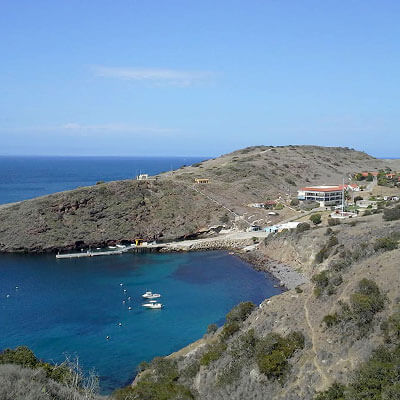
Students in the M.S. in GIST, M.S. in HSGI and Graduate Certificate in GIST programs will participate in a week-long fieldwork excursion...